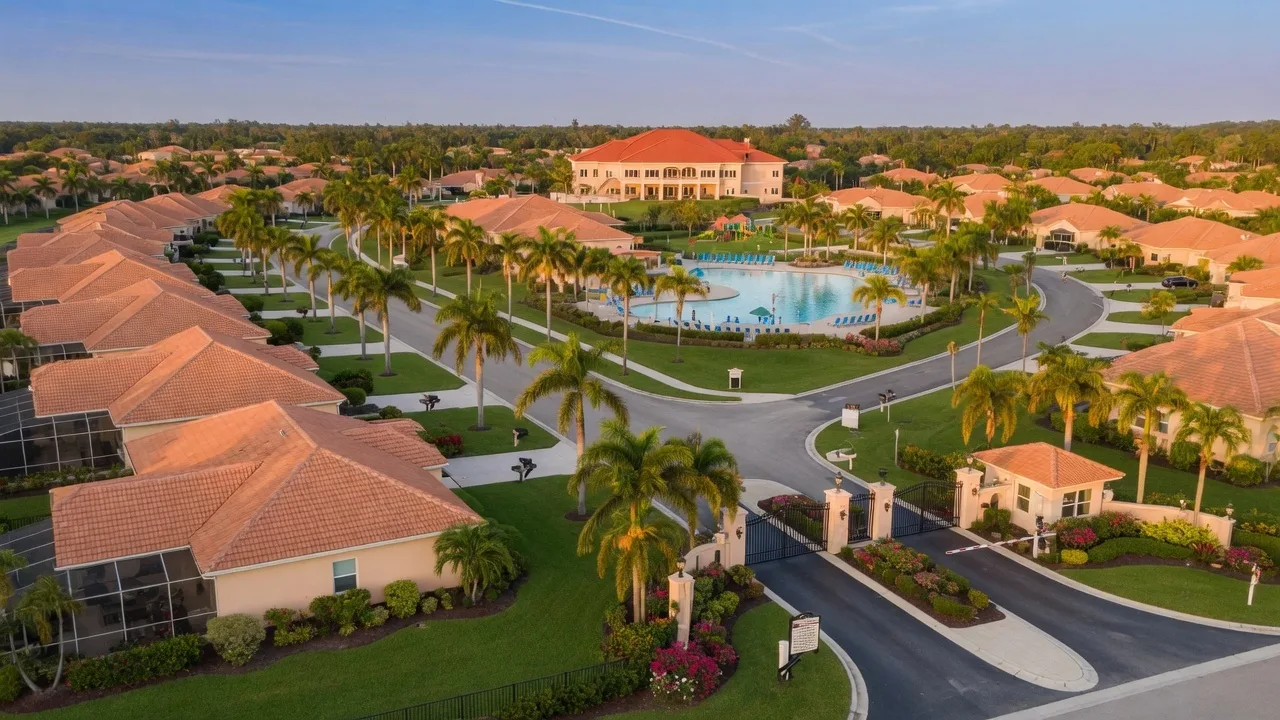
If you are buying a home in Davie, Florida, there is a strong chance the property is part of a homeowners association. HOA communities make up a significant portion of Davie's housing market — from large gated country club neighborhoods to smaller planned developments with shared amenities. Understanding how HOAs work in Davie — what they cost, what rules they enforce, and what your rights are as a homeowner — is one of the most important steps before signing a purchase contract.
Here is a practical guide to HOA living in Davie, based on what buyers need to know in 2026.
How Common Are HOAs in Davie?
Very common. Davie's real estate landscape includes a wide range of HOA-governed communities — from large, amenity-rich developments like Pine Island Ridge and Weston Hills Country Club (which straddles the Davie border) to newer construction communities like Estates by Turnberry and Marigold by Pulte. Even some of Davie's more rural, acreage-based neighborhoods have voluntary or mandatory HOA structures.
For buyers, this means that when you search for homes in Davie, you will almost certainly encounter HOA fees and governing documents as part of the transaction. Understanding those costs and rules upfront helps you avoid surprises after closing.
What Do HOA Fees Cost in Davie?
HOA fees in Davie vary significantly depending on the community, the amenities offered, and the size of the development. Here is a general breakdown of what to expect:
- • Basic communities with limited amenities: $100 to $200 per month. These typically cover common area maintenance, landscaping of shared spaces, and basic community management.
- • Mid-range gated communities: $200 to $400 per month. These often include a guard gate, community pool, clubhouse, tennis or pickleball courts, and maintained entrance landscaping.
- • Full-amenity country club communities: $400 to $800+ per month. These larger developments include golf courses, fitness centers, social event programming, multiple pools, and full-time on-site management. Some may also charge separate club membership dues.
For reference, the Broward County median monthly HOA fee is approximately $425, according to community data aggregators. Florida's statewide average HOA fee is roughly $391 per month based on nearly 29,000 reported associations.
It is important to note that HOA fees can increase over time — particularly when the community faces major repair projects, insurance premium hikes, or reserve fund shortfalls. Florida law requires associations to maintain reserve funds for certain structural and capital items, and recent legislative changes have tightened those requirements.
What Do HOA Fees Typically Cover?
While every community is different, most Davie HOA fees cover some combination of the following:
- • Common area maintenance — landscaping, irrigation, and upkeep of shared green spaces, entrances, and roadways within the community.
- • Amenity access — pools, clubhouses, fitness centers, tennis courts, dog parks, and playgrounds maintained for resident use.
- • Security — 24-hour guard gate staffing, surveillance systems, and patrol services in gated communities.
- • Insurance and reserves — master insurance policies for common structures, and reserve funds for future capital expenses like road repaving, roof replacements, or pool resurfacing.
- • Management and administration — property management company fees, legal costs, accounting, and community communications.
Some communities charge additional special assessments for unexpected expenses — such as hurricane damage repairs or insurance deductible coverage. These can range from a few hundred dollars to several thousand, depending on the scope of work.
Common HOA Rules in Davie Communities
Every HOA has its own CC&Rs (Covenants, Conditions, and Restrictions), but certain rules tend to appear across most Davie communities:
- • Architectural controls: Approval is required before making exterior modifications — including painting, roofing, adding a fence, installing solar panels, or building a patio cover.
- • Parking and vehicle restrictions: Many communities restrict street parking, limit the number of vehicles in driveways, and prohibit commercial vehicles, RVs, boats, or trailers from being visible on the property.
- • Pet policies: Some communities impose breed restrictions, size limits, or caps on the number of pets allowed. Leash requirements are standard.
- • Landscaping standards: Expect rules about lawn maintenance, tree trimming, holiday decorations, and the types of plants or mulch allowed in visible yard areas.
- • Rental restrictions: Many Davie HOAs limit or prohibit short-term rentals like Airbnb, and some require minimum lease terms of six to twelve months. Florida law also provides HOAs with the authority to regulate rentals within certain parameters.
- • Noise and nuisance policies: Especially in gated communities, there are typically enforceable standards around noise levels, trash can placement, and use of common areas.
Florida HOA Laws You Should Know
Florida's HOA laws were significantly updated in 2024 through House Bill 1203, which brought major changes to transparency, member rights, and board accountability. If you are buying into a Davie HOA, these are the key provisions that affect you:
- • Fines are capped: HOAs cannot charge more than $100 per violation or $1,000 total for ongoing violations — unless the governing documents explicitly allow higher amounts. Fines under $1,000 cannot result in a lien against your property.
- • Independent hearing required: Before any fine is imposed, the HOA must provide written notice at least 14 days in advance and give you a hearing before an independent committee — not the board members who issued the violation.
- • Financial transparency: HOAs with 100 or more parcels must provide quarterly financial disclosures and post governing documents, budgets, and meeting minutes online. Associations with 1,000 or more parcels must prepare audited financial statements.
- • Board education: Newly elected board members must complete a state-approved educational course within 90 days of taking office, covering financial literacy, recordkeeping, meeting requirements, and enforcement procedures.
- • Document access: HOAs must provide each member with a copy of all rules and covenants. Members can request a detailed accounting of any amounts owed, and the association must respond within 15 business days — or waive the outstanding fines.
These protections represent a meaningful shift in favor of homeowners. If you are evaluating a Davie HOA community, reviewing the association's compliance with these requirements is a smart part of your due diligence.
How to Evaluate an HOA Before You Buy
Before making an offer on any HOA-governed property in Davie, there are several things worth investigating:
- 1. Review the budget and reserve study. A well-funded reserve account means the community is prepared for future repairs. Underfunded reserves often lead to special assessments — sometimes unexpectedly large ones.
- 2. Check the meeting minutes. Recent board meeting minutes reveal ongoing issues — pending lawsuits, maintenance disputes, insurance challenges, or contentious rule changes.
- 3. Ask about fee history. How often do fees increase, and by how much? A community that has raised fees significantly in recent years may face ongoing cost pressures.
- 4. Read the CC&Rs thoroughly. Every rule in the governing documents is enforceable. If you plan to park an RV, run a home business, or own multiple pets, make sure the community rules allow it.
- 5. Ask about pending litigation. HOAs involved in active lawsuits — whether suing a builder, dealing with construction defects, or pursuing a collections action — may face higher costs and increased risk.
- 6. Verify insurance coverage. Florida's insurance market remains challenging. Ask whether the HOA's master policy is adequate, whether it covers wind and flood, and whether any assessments are expected due to premium increases.
In Florida, buyers typically have the right to review HOA documents during the inspection period. This is a critical window — use it. If something in the budget, rules, or reserve study concerns you, an experienced local agent can help you negotiate or walk away before you are committed.
HOA vs. No HOA: Which Is Right for You?
Davie offers both HOA-governed communities and non-HOA properties — particularly in the more rural, western parts of town where homes sit on one-acre or larger lots. The decision between the two comes down to personal preference:
HOA communities offer structure, maintained common areas, amenities, and a degree of neighborhood consistency. If you value shared pools, gated security, and professionally managed landscaping, an HOA community delivers that experience.
Non-HOA properties offer freedom — no monthly fees, no architectural review process, and no restrictions on parking, pets, or property use. If you want maximum control over your property, western Davie's acreage and equestrian-zoned lots provide that lifestyle.
Many buyers find the right balance by choosing a mid-range HOA community with reasonable fees and practical rules — where the cost is manageable and the amenities genuinely add value to daily life.
Is an HOA Community the Right Fit?
HOA living in Davie is not one-size-fits-all. The key is understanding what you are paying for, what rules you are agreeing to, and whether the association is financially healthy. When those elements align, an HOA community in Davie offers a well-maintained, secure, and amenity-rich lifestyle that is hard to match in other parts of Broward County.
If you are evaluating HOA communities in Davie and want help understanding the fees, rules, and financial health of specific neighborhoods, I can walk you through the details before you make a decision.
Have Questions About Davie HOAs?
Michael Peron knows the HOA communities across Davie — from fee structures and reserve health to rule differences between neighborhoods. He can help you evaluate any community's documents and find the right fit for your lifestyle and budget.
Talk to Michael