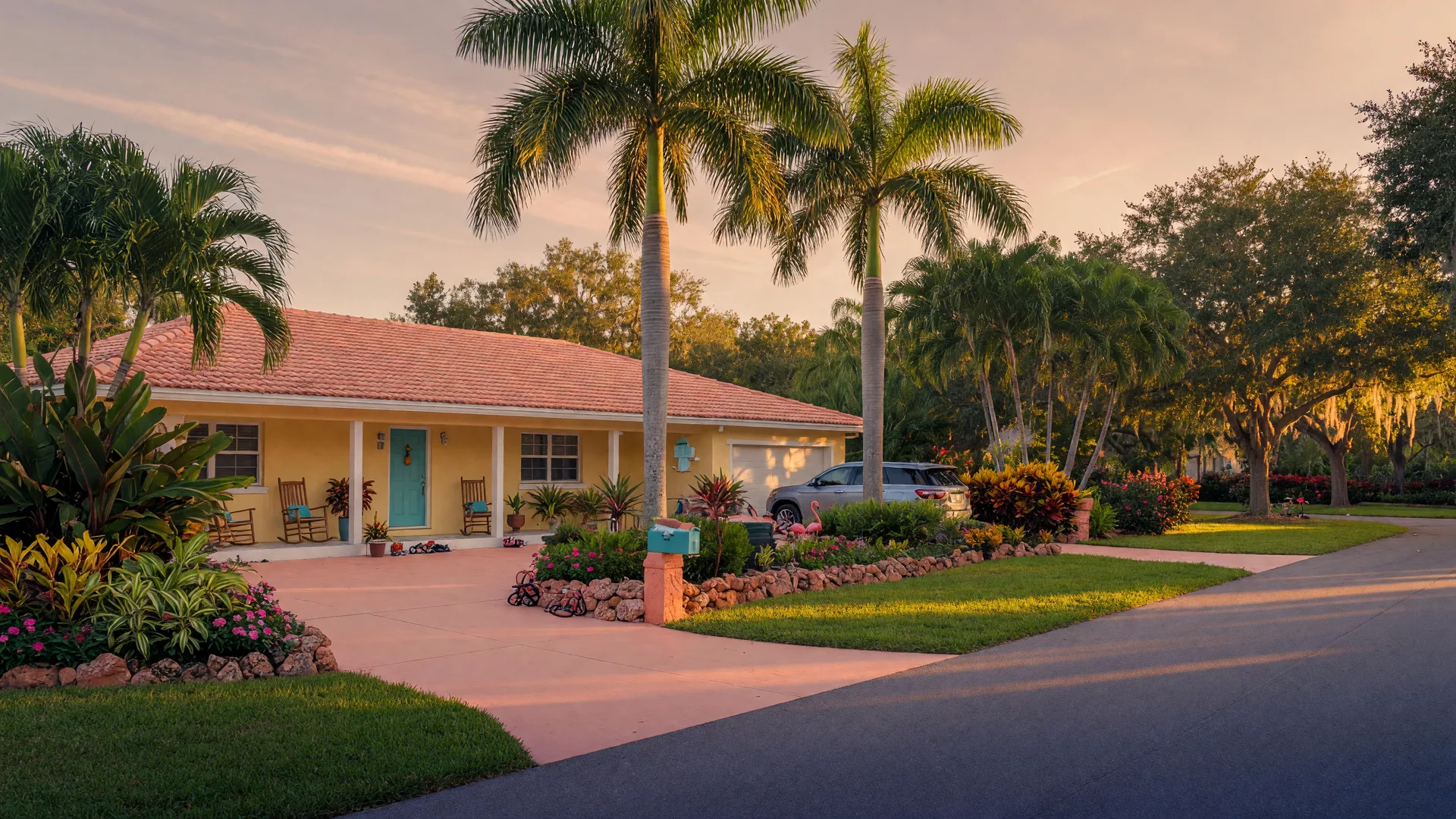
Every winter, Florida's population swells by roughly 2 million seasonal residents — the snowbirds who trade cold northern winters for warm South Florida days. Broward County is one of the most popular destinations, and Davie, with its spacious lots, equestrian charm, and quieter pace of life, has become an increasingly attractive option for seasonal residents looking for something different than the typical beach-condo snowbird experience. If you are considering becoming a part-time Davie resident, here is everything you need to know.
Why Davie Appeals to Snowbirds
Davie offers a distinct lifestyle compared to the more traditional snowbird destinations in South Florida. Instead of high-rise condos on the beach, you get single-family homes on larger lots, tree-lined streets, and a community that feels more suburban than resort-style. For snowbirds who want space, privacy, and the ability to spread out — especially those coming from northern suburbs where they are used to having a yard and a garage — Davie feels familiar.
The town also offers practical advantages for seasonal residents. Davie's central Broward County location means you are within 20 to 30 minutes of Fort Lauderdale-Hollywood International Airport, making travel back and forth convenient. You are also close to major highways, shopping, dining, and world-class healthcare facilities — all things that matter more when you are managing a second home from a distance.
What Snowbirds Should Know About Buying in Davie
HOA Rules and Seasonal Use
If you are buying in a Davie community with a homeowners association, pay close attention to the rules. Florida HOAs are governed by Chapter 720 of the Florida Statutes, and their rules apply equally to part-time and full-time residents. Some communities have minimum occupancy requirements, restrictions on how long a home can sit vacant, rules about lawn maintenance when you are away, and limits on short-term rentals if you ever decide to rent the property during the months you are not using it.
Before you buy, ask the HOA directly about any policies that could affect seasonal residents. Some associations offer services like lawn care coordination or house-watch programs that can be helpful for owners who are away for months at a time.
Condo Associations and Special Assessments
If you are considering a condo rather than a single-family home, be aware that Florida condo associations — governed by Chapter 718 — have been under increased scrutiny following the Surfside collapse. New state laws require condo associations to maintain adequate reserves and conduct structural inspections. This has led to significant special assessments in some buildings. If you are a seasonal resident managing a property from out of state, an unexpected special assessment can be disruptive. Always review the association's financials and reserve study before you buy.
Insurance Costs Are Higher Than You Expect
This is the single biggest surprise for many snowbirds moving to South Florida. Homeowners insurance in Broward County is significantly higher than the national average, driven by hurricane risk, reinsurance costs, and the overall Florida insurance market. A typical Davie home might cost $3,000 to $6,000 or more per year to insure, depending on the age of the home, the roof, and whether it has impact windows.
If you are buying a condo, check whether the building's master policy covers the interior of your unit or only the structure. Some condo owners are surprised to learn they need a separate policy for everything inside their walls. Get insurance quotes before you commit to a purchase so there are no surprises.
Vehicle Registration: What Snowbirds Need to Know
Florida law requires you to register your vehicle in Florida if you keep it in the state for more than 90 days in any 12-month period. There is no seasonal or snowbird exemption — the 90-day rule applies to everyone. You will need to provide proof of Florida residency (such as a deed, lease, or utility bill), pass a vehicle inspection, and purchase Florida license plates.
This is one of those details that many snowbirds overlook until they get pulled over or renew their out-of-state registration and realize they need to switch. Plan ahead and factor this into your seasonal transition timeline.
Tax Considerations for Seasonal Residents
One of the biggest draws of Florida for snowbirds is the absence of a state income tax. But the tax picture is more nuanced than it first appears:
- No state income tax. Florida has none. If you are coming from a state with high income taxes, this alone can save you thousands of dollars per year.
- Homestead exemption. To qualify for Florida's homestead exemption (which reduces your property tax bill by up to $50,000 of assessed value), you must make Florida your permanent residence. Seasonal residents generally do not qualify unless they officially change their primary domicile.
- Sales tax. Florida's state sales tax is 6%, with Broward County adding a small surcharge. This applies to most purchases and is something to factor into your cost of living calculations.
- Estate tax considerations. Florida has no state estate or inheritance tax, which can be a significant advantage for snowbirds with substantial assets.
If you are considering becoming a full-time Florida resident rather than staying seasonal, the homestead exemption and elimination of state income tax can dramatically improve your financial picture.
Managing a Davie Home From Out of State
One of the practical realities of snowbird life is that your second home sits empty for months at a time. Here are the things seasonal Davie homeowners should plan for:
- Lawn and pool maintenance. South Florida grows year-round. If you are away from May through October, your yard will need regular care. Most HOAs require maintained lawns, and pool maintenance during the hot summer months is essential to prevent algae growth and equipment damage.
- Hurricane preparedness. Hurricane season runs from June 1 to November 30. If you are away during peak season, you need a plan. Impact windows reduce the risk, but you should still have someone local who can check on the property before and after a storm.
- Pest control. Florida's warm, humid climate means pests are active year-round. Regular pest control service is worth the investment for a home that sits vacant.
- Mail forwarding and package security. If you are away for months, packages left at the door are an invitation. Consider a mail forwarding service or a neighbor who can collect deliveries.
- Seasonal utility management. Some snowbirds keep their AC set to a higher temperature while away (82 to 85 degrees) to save on electricity while still preventing humidity damage. Smart thermostats make this easy to manage remotely.
The Davie Lifestyle Advantage for Snowbirds
Beyond the practical considerations, Davie offers a quality of life that works exceptionally well for seasonal residents. The town's parks, equestrian trails, farmers markets, and community events give snowbirds things to do during their winter stay. You are also close to Fort Lauderdale's beaches, cultural attractions, dining scene, and the Seminole Hard Rock Hotel and Casino in nearby Hollywood.
For snowbirds who want the warmth, the lifestyle, and the tax advantages of Florida without living in a high-rise condo or a dense coastal community, Davie is a strong option worth serious consideration.
Looking for a Davie Winter Home?
Michael Peron specializes in helping seasonal buyers find the right Davie property for their snowbird lifestyle. With 24 years of local market knowledge, he can help you navigate HOAs, insurance considerations, and the neighborhoods that work best for part-time living.
Talk to Michael