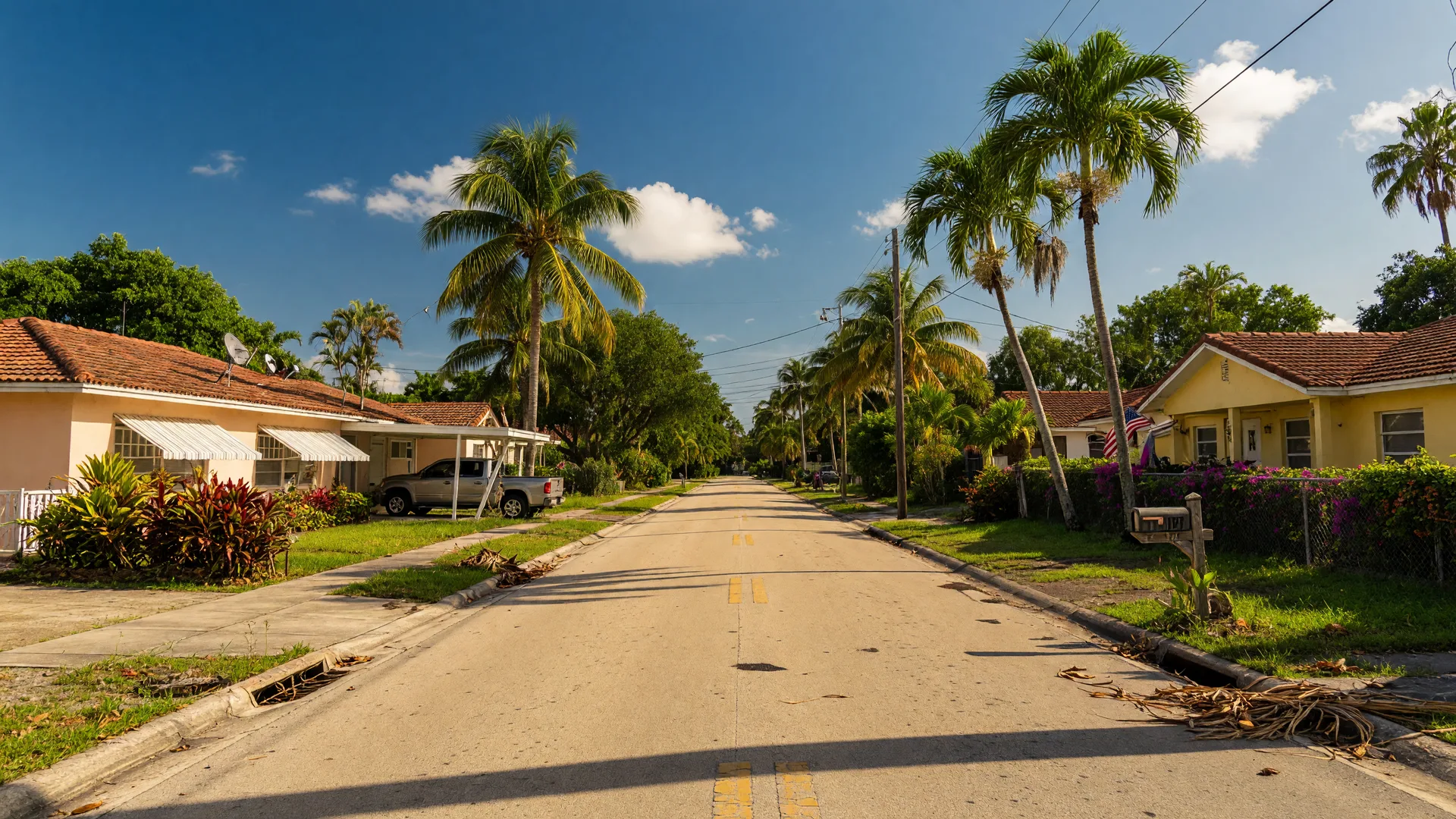
One of the first questions people ask when considering a move to Davie, Florida is: what is the weather actually like? After all, the climate shapes everything — from your daily routine and utility bills to your insurance costs and overall quality of life. As someone who has lived and worked in South Florida for over two decades, I can tell you that Davie's weather is one of its strongest selling points — but it comes with a few things you should know before you pack your bags.
Here's a straightforward, month-by-month breakdown of what to expect from the weather in Davie, Florida — including heat, humidity, hurricane season, rainfall, and flood considerations that every homeowner should understand.
Davie FL Weather at a Glance
Davie sits in western Broward County, roughly 25 miles northwest of Fort Lauderdale and about 30 miles north of Miami. Its inland location gives it a slightly different feel from the coastal cities — less ocean breeze, but also less salt air and slightly cooler evenings during the winter months. Davie averages about 243 sunny days per year, which is well above the national average of 205. That means roughly two-thirds of the year comes with clear skies and sunshine.
The climate is classified as tropical monsoon, which means warm temperatures year-round, a distinct wet season in the summer and fall, and a dry, mild season from November through April. For people moving from the Northeast, Midwest, or West Coast, the biggest adjustment is usually the humidity — and the fact that summer temperatures rarely dip below 80 degrees, even at night.
Month-by-Month Temperature Breakdown
Winter (December – February)
Winter in Davie is the reason most people move to South Florida. Daytime highs hover between 73°F and 75°F, with overnight lows in the low-to-mid 60s. January and February are the coolest months, but "cool" in Davie means light jacket weather — not coat weather. Rain is minimal, humidity drops to its lowest levels of the year, and the sunshine is almost daily. This is peak season for outdoor activities, equestrian events, and real estate showings. If you enjoy walking, hiking, or spending time on Davie's 187-mile trail system, winter is the ideal time.
Spring (March – May)
Spring is when Davie starts to heat up — both in temperature and in activity. March and April see highs climbing into the low 80s, with very comfortable humidity levels, especially in March (around 67% relative humidity — the lowest of the year). By May, temperatures reach the mid-80s and afternoon thunderstorms start to appear. Spring is popular with buyers who want to close on a home before summer. The weather is still pleasant enough for extended outdoor time, and the market tends to be active.
Summer (June – August)
Summer in Davie is hot and humid. Daytime highs consistently hit 87°F to 90°F, and overnight lows rarely drop below 79°F. Humidity is at its peak, and the daily pattern usually involves clear mornings, building clouds, and afternoon thunderstorms that roll in between 2 and 6 PM. These storms are typically short but intense — heavy rain, lightning, and occasional gusty winds. Most clear up quickly, leaving warm, dry evenings. The key to enjoying Davie summers is air conditioning (which every home has), early-morning outdoor activities, and water — pools, lakes, and nearby beaches.
Monthly rainfall peaks in September at roughly 9 inches, but June through October collectively accounts for the majority of Davie's annual 65 inches of total rainfall. If you are evaluating a home purchase, summer is a good time to observe drainage patterns on a property and ask about flood zone designation.
Fall (September – November)
September and October are the wettest and most hurricane-active months. Temperatures start to ease from the upper 80s in September to the low 80s by November. Humidity begins to drop, and by November, conditions feel significantly more comfortable. Fall is also when Davie's real estate market picks back up after the summer slowdown. November, in particular, is an excellent month — warm days, cooler evenings, low humidity, and beautiful light. Many buyers who relocated during the summer use the fall to settle in and explore the community.
Hurricane Season in Davie: What Homeowners Need to Know
Hurricane season runs from June 1 through November 30, and Davie — like all of South Florida — is within the seasonal threat zone. The peak risk period is typically mid-August through mid-October. While Davie's inland location provides some protection from the most severe coastal storm surge, the town is still vulnerable to high winds, heavy rain, and inland flooding from tropical systems.
Most Davie homeowners carry hurricane insurance as part of their property coverage. Florida law requires insurers to offer windstorm coverage, and mortgage lenders in flood zones require flood insurance as well. As of July 2024, FEMA updated its Flood Insurance Rate Maps for Davie, adding approximately 1,934 parcels to high-risk flood zones. This is an important detail for anyone buying a home in Davie — your flood zone status directly affects your insurance costs and, in some cases, your monthly payment.
That said, many long-time Davie residents will tell you that hurricane prep becomes routine. Storm shutters or impact windows, a well-stocked supply kit, a clear evacuation plan if you are in a flood zone, and reliable insurance are the essentials. The peace of mind that comes from proper preparation — and the fact that major hurricane direct hits in Broward County have been relatively infrequent — makes the risk manageable for most families.
Flood Zones and Drainage in Davie
Flood risk is one of the most important — and most overlooked — factors when purchasing a home in Davie. A significant portion of the town sits within the C-11 West basin, which is classified as a Special Flood Hazard Area. Homes in these high-risk zones (A and V zones on FEMA maps) require flood insurance, which can add hundreds or even thousands of dollars to your annual housing costs.
Davie has invested in stormwater management infrastructure, and the town has proposed additional assessments to address recurring drainage issues. When evaluating properties, I always recommend checking the specific FEMA flood zone designation for any address. You can do this through the FEMA Flood Map Service Center at msc.fema.gov. Some buyers are surprised to learn that a property one block from another can have a completely different flood zone classification — and a very different insurance bill.
How Davie's Climate Compares to Nearby Cities
Because Davie is inland, it tends to be slightly warmer in the summer and slightly cooler in the winter than coastal cities like Fort Lauderdale, Hollywood, or Pompano Beach. The ocean moderates coastal temperatures by a few degrees on each end. If you are choosing between Davie and a coastal city, the trade-off is straightforward: Davie gives you more land, larger lots, lower density, and a quieter environment, while the coast offers ocean breezes and beach access. Both have excellent weather — it just depends on your priorities.
Is the Davie FL Climate Right for You?
For people who love sunshine, warm weather, and an outdoor lifestyle, Davie delivers. The winters are beautiful, the summers are hot but manageable, and the community is built around enjoying the environment — from equestrian trails to nature preserves to neighborhood pools. The main trade-offs are summer humidity and hurricane preparedness, both of which are part of life throughout South Florida.
If you are evaluating Davie as a place to live, understanding the climate is part of understanding the full picture. I help buyers factor weather into their decisions alongside school zones, commute times, flood zones, and home values — because the right home isn't just about the property. It's about the lifestyle that comes with it.
Have Questions About Living in Davie?
Michael Peron knows the Davie market inside and out — from flood zones and insurance to neighborhoods and lifestyle. Whether you're buying your first home or relocating from out of state, he can help you understand what life in Davie really looks like.
Talk to Michael